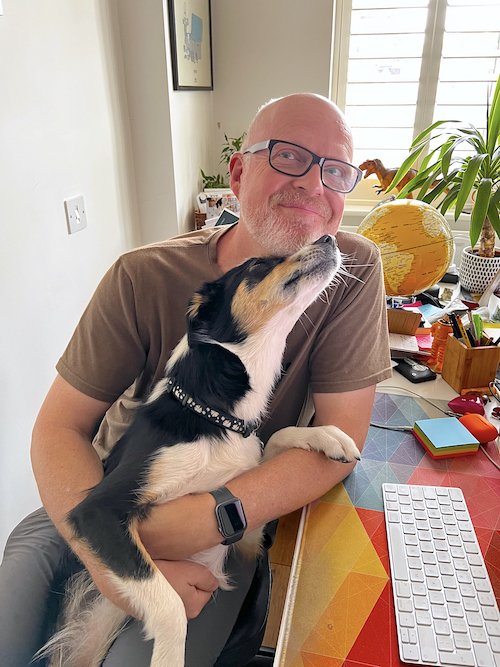
Awwww wish I could bring in my dog to work as its a lovely initiative and I understand it contributes greatly to well being. Unfortunately our Muslim employees won't allow it as they state dogs are "Haram" unless they are used for hunting or guarding.
One might say that this is a case of the tail wagging the dog.
However, for those who are interested in implementing dogs in the workplace, be it on a one-off basis or as a regular feature, Blue Cross for Pets has issued guidance on the inclusion of dogs in the workplace that incorporates consideration for those who may be allergic and those who may have phobias or other objections to dogs in their vicinity. Their guidance also takes into account the charity's expertise in animal welfare and behaviour, because dogs can actually find entering a workplace quite stressful and the sudden exposure to a wide range of new people can elicit abnormal behaviour from even the most placid dog.
Dogs in the workplace should not be allowed to roam. They should be kept in an office with their owner with the door closed, or on the lead under a desk to reduce over-stimulation. They should have somewhere their owner can take them several times per day for exercise. Colleagues should not approach or give attention to dogs that aren't theirs, even with permission or if the dog appears receptive to attention.
This advice can seem counter-intuitive to those who want an "office pet" for the supposed welfare benefits of patting a dog during the work day, but bringing a personal pet to work is not the same as having a dedicated office pet. Welfare animals, such as those that work in children's wards or schools, are specially selected, trained and acclimated to their work and the environment. They aren't just a random cute dog.
One might say that this is a case of the tail wagging the dog.
However, for those who are interested in implementing dogs in the workplace, be it on a one-off basis or as a regular feature, Blue Cross for Pets has issued guidance on the inclusion of dogs in the workplace that incorporates consideration for those who may be allergic and those who may have phobias or other objections to dogs in their vicinity. Their guidance also takes into account the charity's expertise in animal welfare and behaviour, because dogs can actually find entering a workplace quite stressful and the sudden exposure to a wide range of new people can elicit abnormal behaviour from even the most placid dog.
Dogs in the workplace should not be allowed to roam. They should be kept in an office with their owner with the door closed, or on the lead under a desk to reduce over-stimulation. They should have somewhere their owner can take them several times per day for exercise. Colleagues should not approach or give attention to dogs that aren't theirs, even with permission or if the dog appears receptive to attention.
This advice can seem counter-intuitive to those who want an "office pet" for the supposed welfare benefits of patting a dog during the work day, but bringing a personal pet to work is not the same as having a dedicated office pet. Welfare animals, such as those that work in children's wards or schools, are specially selected, trained and acclimated to their work and the environment. They aren't just a random cute dog.