What the EU Referendum result means for HR...

In the light of vote to leave EU, we’ll be contacting CIPD members to advise them what the result means for HR and the world of work.

More to come during the day, which I will post here.
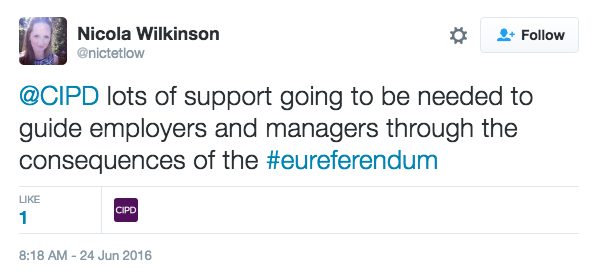
UPDATE: Download Vote Leave Q & A...

Parents
  • In employment terms, one key element that has hardly been covered concerns social securtiy reciprocal agreements. A person contributing to the social security system in one EU can benefit from coverage in other countries in the case of international mobility. For example, under this reciprocal system my 10 years of paying into the UK social security system gives me a certain amount of credit for a french state pension. Similarly, access to the medical system of EU coutries is available for people who contribute to the social security system of another country - reducing (but not removing) the need for medical insurance when traveling in Europe.
    Stepping outside of the EU will require the negotiation and implementation of bilateral social security treaties with each EU state - or (more likely) a grouped one such as the treaty between Switzerland and all EU states.
  • Ray
    "A person contributing to the social security system in one EU can benefit from coverage in other countries in the case of international mobility"
    In theory yes - but not always. I was working in the EU for 2 years, but HMRC wont credit anything!
  • Mike
    The procedure may be complicated - but,provided you meet the eligibililty criteria and have obtained all the appropriate employer/employee contribution certification from the authorities in the state in question, there is no reason why you should not be able to get your years of social security contributions counting towards the basic state pension. In your case, two years of contributions will probaly make next to no difference to the level of basic state pension. If you were working as an independent consultant/contractor, then that can be problematic for some countries where the social security regime is not necessarily a normal "state" régime.
    What was your specific situation?
Reply
  • Mike
    The procedure may be complicated - but,provided you meet the eligibililty criteria and have obtained all the appropriate employer/employee contribution certification from the authorities in the state in question, there is no reason why you should not be able to get your years of social security contributions counting towards the basic state pension. In your case, two years of contributions will probaly make next to no difference to the level of basic state pension. If you were working as an independent consultant/contractor, then that can be problematic for some countries where the social security regime is not necessarily a normal "state" régime.
    What was your specific situation?
Children